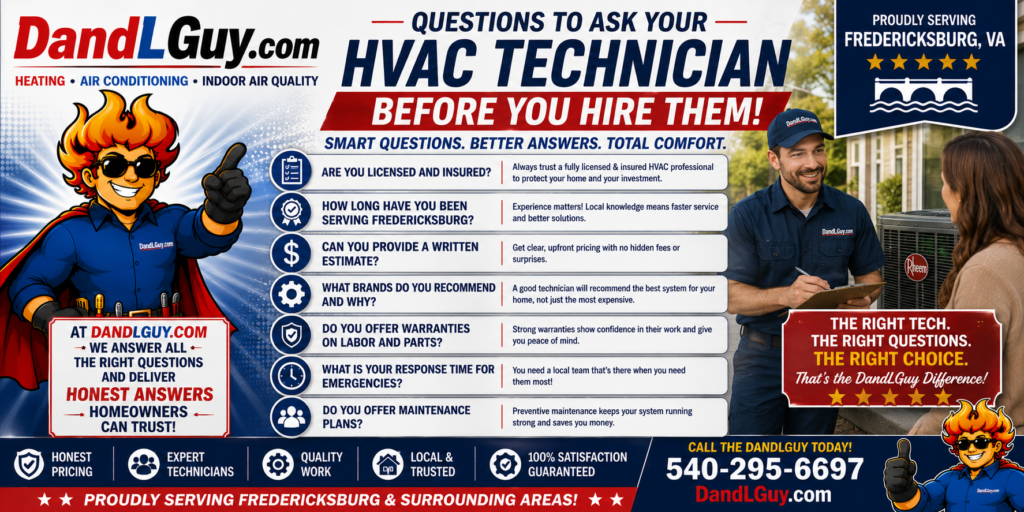
Knowing the right questions to ask HVAC Technician or Hiring the right HVAC technician can save you thousands of dollars, prevent future breakdowns, and help your heating and cooling system last longer. Whether you need AC repair, furnace service, a heat pump installation, or routine maintenance, asking the right questions helps you avoid poor workmanship and unnecessary upsells.
Many homeowners feel pressured during HVAC service calls because they are unfamiliar with technical terms, pricing, or equipment recommendations. Knowing what to ask before work begins can help you make informed decisions and protect your investment.
In this guide, we’ll cover the most important questions to ask an HVAC technician before repairs, replacement, maintenance, or installation.
ENERGY STAR’s official “10 Tips for Hiring a Heating and Cooling Contractor”
The U.S. Department of Energy’s ENERGY STAR program recommends checking a contractor’s license and insurance, asking for referrals, and getting a written proposal before any work begins—all good questions to ask HVAC technician candidates during your search.
Top Questions to Ask HVAC Technician Before You Hire
Asking the right questions to ask HVAC technician candidates helps you compare quotes fairly and avoid hidden fees.
Your HVAC system is one of the most expensive systems in your home. Poor installation or incorrect repairs can lead to:
Higher electric bills, Uneven heating and cooling, Humidity problems, Frequent breakdowns, Shortened equipment lifespan
Voided manufacturer warranties: A trustworthy HVAC technician should be willing to explain the problem clearly, provide options, and answer questions without pressure.
Questions to Ask Before Hiring an HVAC Technician
1. Are You Licensed and Insured?
Always verify that the HVAC company carries proper licensing and insurance.
This protects you if:
Property damage occurs
A worker gets injured
The installation fails inspection
Warranty claims arise later
A reputable contractor should never hesitate to provide proof of:
State HVAC license
General liability insurance
Workers’ compensation insurance
Searching for a “licensed HVAC contractor near me” is a good starting point when comparing companies.
2. How Long Have You Been Working on HVAC Systems?
Experience matters, especially with:
Heat pumps
Ductless mini splits
Older furnace systems
High-efficiency HVAC equipment
Zoning systems
Ask how long the technician has worked in the industry and whether they regularly service your specific equipment brand.
An experienced HVAC technician can often diagnose problems faster and avoid unnecessary parts replacement.
3. What Is Actually Causing the Problem?
One of the best questions homeowners can ask is:
“What failed and why did it fail?”
A good technician should explain:
What component failed
What caused the failure
Whether additional damage exists
If the repair is temporary or long-term
Avoid contractors who immediately recommend complete system replacement without diagnostics or explanation.
Questions About HVAC Repair Costs
4. Can You Provide a Written Estimate?
Always ask for a detailed written estimate before approving work.
The estimate should include:
Labor costs
Parts costs
Diagnostic fees
Warranty information
Additional charges
This helps prevent surprise charges later.
If you’re comparing HVAC companies, written estimates make it easier to evaluate pricing fairly.
5. Is This Repair Worth Doing?
Sometimes repairing an older HVAC system makes sense. Other times replacement is the better investment.
Ask:
How old is my system?
How long should this repair last?
Are other major components likely to fail soon?
Would replacement improve efficiency significantly?
A trustworthy HVAC technician should explain both repair and replacement options honestly.
6. Are There Any Additional Problems I Should Know About?
Some HVAC issues are symptoms of larger problems like:
Dirty evaporator coils
Poor airflow
Duct leakage
Refrigerant leaks
Oversized systems
Electrical issues
Catching these problems early can prevent future breakdowns.
Questions About HVAC System Replacement
7. Did You Perform a Load Calculation?
This is one of the most important questions when replacing an HVAC system.
A load calculation determines the correct system size for your home based on:
Square footage
Insulation levels
Windows
Ceiling height
Sun exposure
Air leakage
Oversized HVAC systems are extremely common and can cause:
Short cycling
Poor humidity control
Uneven temperatures
Higher utility bills
Never accept equipment sizing based only on your old system size.
8. What Efficiency Rating Should I Choose?
Ask the technician to explain:
SEER2 ratings
AFUE ratings
HSPF ratings
Energy savings estimates
Higher efficiency systems can reduce utility bills, but the most expensive option is not always the best return on investment.
A good HVAC contractor should help balance:
Budget
Comfort
Energy savings
Long-term maintenance costs
9. What Warranty Comes With the Equipment and Labor?
Many homeowners assume all HVAC warranties are the same — they are not.
Ask:
How long is the manufacturer warranty?
Is labor included?
Are annual maintenance visits required?
What voids the warranty?
Some contractors also offer additional labor warranties beyond manufacturer coverage.
Questions About HVAC Maintenance
10. How Often Should My HVAC System Be Serviced?
Most HVAC systems should be serviced:
Twice per year for heat pumps
Annually for furnaces
Annually for air conditioners
Routine maintenance helps:
Improve efficiency
Catch problems early
Extend equipment life
Maintain warranty coverage
Ask what is included during maintenance visits.
11. How Often Should I Change My Air Filter?
Dirty air filters are one of the most common causes of HVAC problems.
The answer depends on:
Filter type
Pets in the home
Allergies
System usage
Most homeowners should inspect filters monthly.
12. Is My Ductwork in Good Condition?
Even the best HVAC equipment performs poorly with damaged ductwork.
Ask the technician to inspect for:
Air leaks
Poor insulation
Crushed ducts
Mold issues
Improper sizing
Leaky ducts can waste significant energy and reduce comfort.
Questions About Indoor Air Quality
13. Is My HVAC System Affecting Indoor Air Quality?
Indoor air quality has become a major concern for homeowners.
Ask about:
Air purification systems
UV lights
Humidity control
Dehumidifiers
High-efficiency filtration
Poor indoor air quality can contribute to:
Allergies
Dust buildup
Musty odors
Excess humidity
Red Flags to Watch For
Be cautious if an HVAC technician:
Refuses to provide written estimates
Pushes immediate replacement without testing
Avoids answering questions
Cannot explain the issue clearly
Uses high-pressure sales tactics
Recommends oversized equipment
A quality HVAC contractor focuses on education and solutions not pressure.
Final Thoughts
Knowing what questions to ask an HVAC technician can help you avoid expensive mistakes and feel more confident during service calls.
The best HVAC companies take time to:
Keeping this list of questions to ask HVAC technician companies handy will help you feel confident every time you schedule service.
Explain problems clearly
Offer honest recommendations
Provide detailed estimates
Size systems correctly
Stand behind their work
Whether you need HVAC repair, system replacement, or seasonal maintenance, asking the right questions helps protect your comfort and your budget.
If you’re searching for a trusted local HVAC contractor, make sure you choose a licensed company with strong customer reviews, transparent pricing, and experience servicing your type of system.
When considering how to choose an HVAC contractor, it is essential to prepare a comprehensive list of questions to ask an HVAC technician. Inquire about their qualifications, experience, and service warranties to ensure you are selecting a qualified professional. Additionally, discussing the questions to ask before HVAC replacement will provide valuable insights into the options available and help you make an informed decision. Ultimately, a thorough vetting process will lead to a more satisfactory and efficient HVAC service experience.
 D
&
L
G
U
Y
D
&
L
G
U
Y